
La Seguridad Social finaliza con éxito el primer proceso de regularización de cuotas de los trabajadores autónomos
27/05/2025
Council of Ministers
Social Security successfully completes the first process of regularization of quotas for self-employed workers
Topics:
- More than 3.7 million self-employed have regularized their contributions according to the real returns of 2023
- For more than two million people, no adjustments have been necessary. About 1.6 million have been subject to regularization. Of these, some 796,000 were under-quoted and more than 460,000 were over-quoted and have received a refund.
- Elma Saiz: “We want no self-employed person to feel alone, which is why we have strengthened all the channels of attention and launched tools such as the IMPORTASS app, already installed on more than 1.1 million mobiles”
Share on social networks:
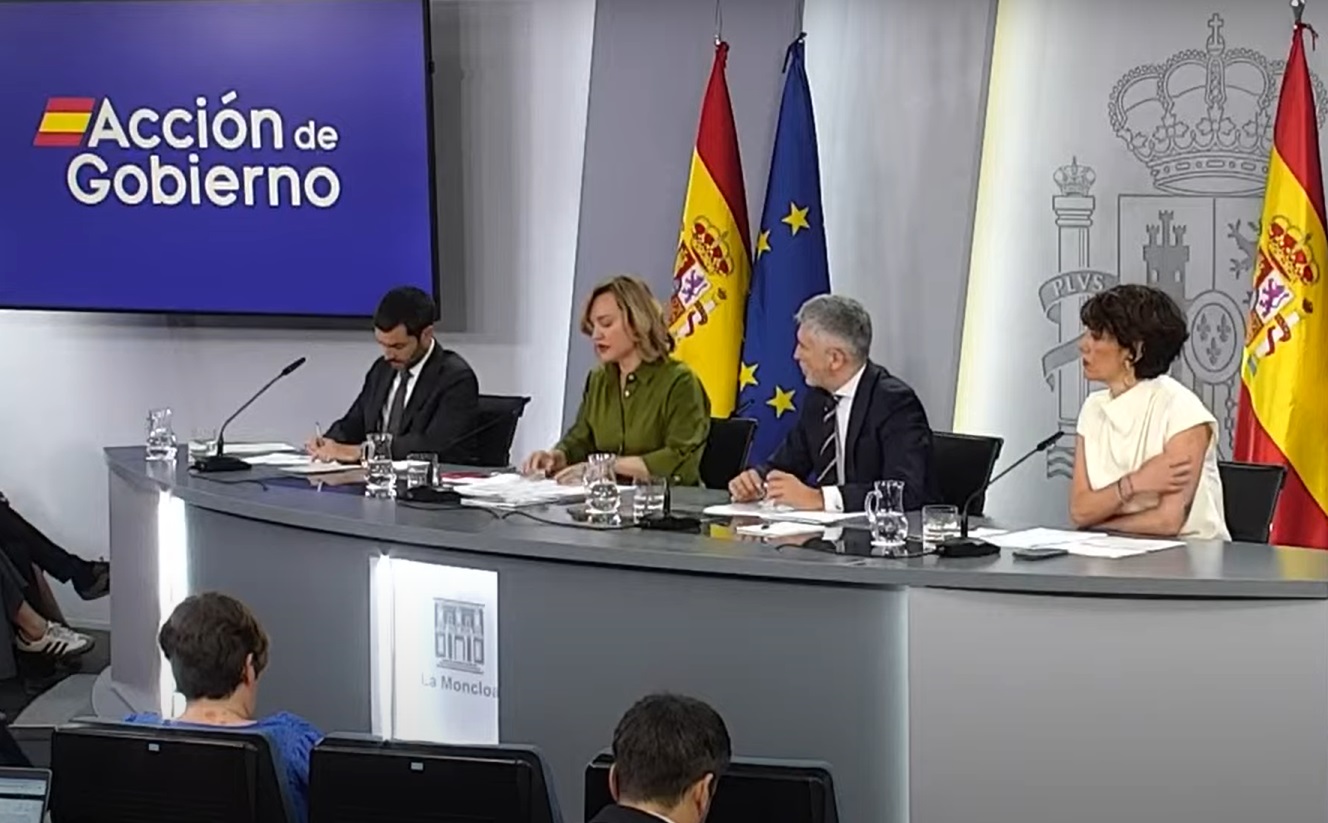
On Tuesday, the Minister of Inclusion, Social Security and Migration, Elma Saiz, presented to the Council of Ministers the results of the first process of regularization of quotas for self-employed workers, after the entry into force of the new system of contributions for real returns in 2023.
The self-employed have an increasing weight in our labor market. Currently, there are more than 3.4 million workers, where there is an increasing female participation (1.3 million), which are historically high figures and reflect the evolution of society and the Social Security system itself since almost half a million self-employed people come from other countries.
The group of self-employed workers, which has increased by more than 94,000 new members since 2023, exemplifies the improvement in the quality of employment. “We are seeing a very significant increase in highly productive sectors such as scientific-technical activities and the information and communication sector,” said the minister, who pointed out that these sectors of activity justify more than half of the new jobs in the last year.
A structural reform
The new contribution model, included in Royal Decree-Law 13/2022, establishes that self-employed workers must pay contributions based on their annual net returns. This transformation responds to the principles of contributory justice, progressive equity and sustainability, and puts an end to a system that represented pensions much lower than those of salaried workers.
“For a long time, more than 80% of these workers paid for the minimum base, which led to situations of injustice and pensions up to 37% lower than other regimes and with a percentage of 36% that needs to supplement minimums,” the minister recalled.
The reform has its origin in the Toledo Pact of 2020, which included the recommendation to link the contribution bases of the self-employed to their real income. It was later integrated into the Government’s Recovery, Transformation and Resilience Plan. In 2022, after a broad agreement in the Social Dialogue Table —with the participation of unions, employers and associations representing the collective such as UPTA, ATA and UATAE— its implementation was approved. The RDL was approved in Congress with more than 75% of the votes in favor.
Results of the first regularization exercise
The regularization process began in October 2024, after the closure of the IRPF campaign. Its management has required complex technical and administrative coordination, with more than 1.5 billion updates of data from the Tax Agency, the General Treasury of Social Security (TGSS), the mutual funds, the SEPE and the foral haciendas. In total, the contributions of more than 3.7 million self-employed have been reviewed and more than 4.2 million notifications have been issued.
For more than two million people it has not been necessary to make adjustments: 1.3 million were listed within the corresponding tranche and another 800,000 were in non-regularizable situations, such as flat rates, subsidies or pensions. About 1.6 million have been subject to regularization. Of these, some 796,000 were underquoted and have had to pay for differences. More than 460,000 did so over and they have received a refund. In addition, 324,000 did not submit a return declaration, for different reasons.
In addition, returns have already been initiated to some 40,000 self-employed workers in multiactivity who overpaid, in figures similar to the previous year. On the other hand, there have been more than 429,377 waivers of the quota refund.
Personalized information and attention
The minister stressed that accompaniment has been key to the success of the process. More than 350 informative meetings have been held with associations, professional associations and groups. Face-to-face and telephone care channels have been strengthened, and information materials, guides and dissemination through social networks have been developed.
One of the fundamental tools has been Importass, the Social Security portal and app, which allows self-employed workers to consult their situation, receive notifications and resolve incidents. It already exceeds one million hundred thousand installations on mobile devices. In addition to the telematic channels, almost 7,000 face-to-face consultations have been attended to. “We wanted no self-employed person to feel alone in this process. That is why we have strengthened the channels of attention and developed accessible and useful digital tools”, explained the minister.
Once the first regularization is completed, the Government will convene in the coming weeks the Social Dialogue Table to agree the new contribution tables for the coming years, as foreseen in the transitional provision of RDL 13/2022.
The Minister closed her speech by stressing that the Government’s objective is to consolidate a fair, understandable and predictable contribution system. “This first exercise shows us that it is possible to move towards a more just and supportive system, leaving no one behind,” he concluded.