El FISI presenta su Informe Anual 2024 con propuestas para fortalecer la integración de las personas migrantes y solicitantes de protección internacional y temporal en España - Observatorio Español del Racismo y la Xenofobia
16/06/2025
FISI (Forum for the Social Integration of Immigrants)
FISI presents its Annual Report 2024 with proposals to strengthen the integration of migrants and applicants for international and temporary protection in Spain
Temática:
Tipología:
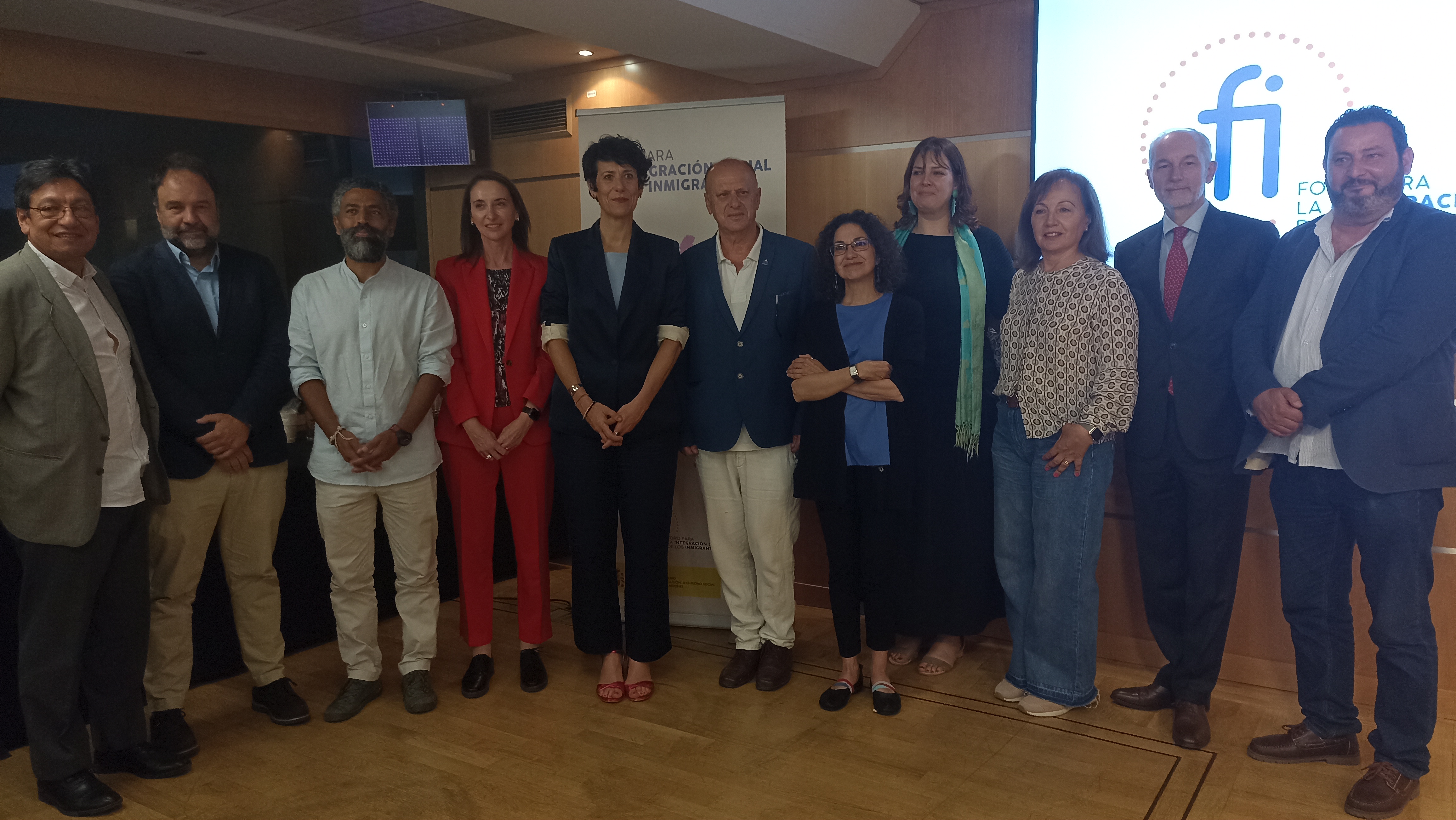
- The event was attended by the Minister of Inclusion, Social Security and Migration, Elma Saiz and the Secretary of State for Migration, Pilar Cancela.
- The presentation covered the main developments of 2024 and highlighted the need to prioritize integration, the role played by migrant associations and the persistence of obstacles and gaps in the workplace, especially for women.
- The new Regulation on Foreigners and the socio-educational roots were key themes of the presentation
Share on social networks:
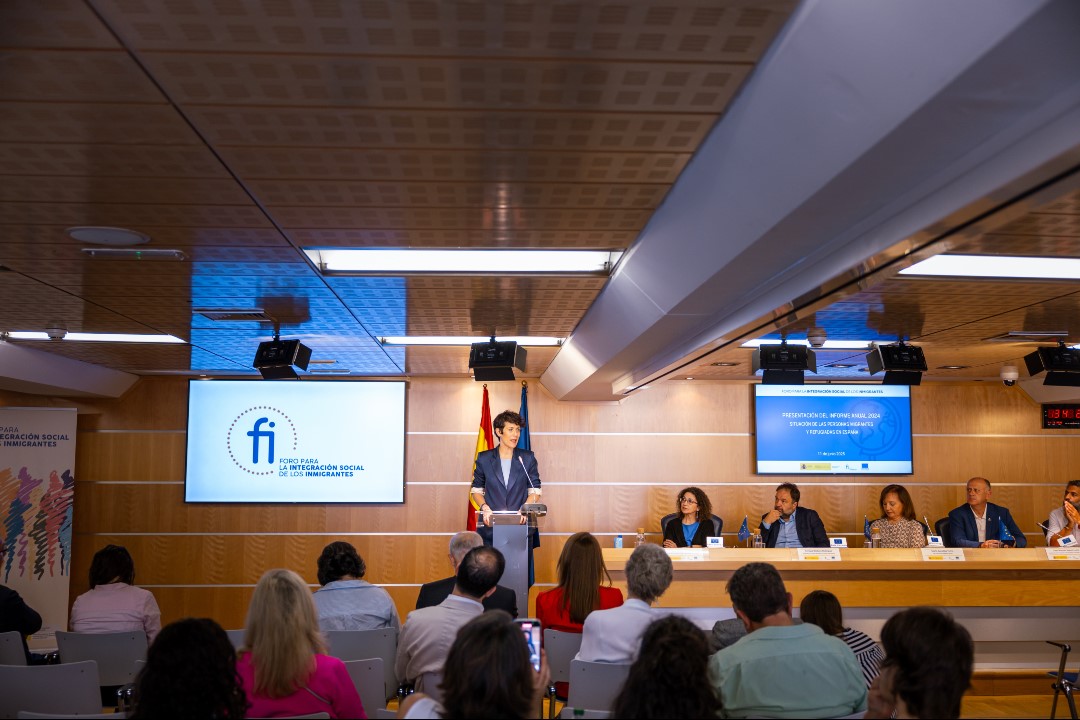
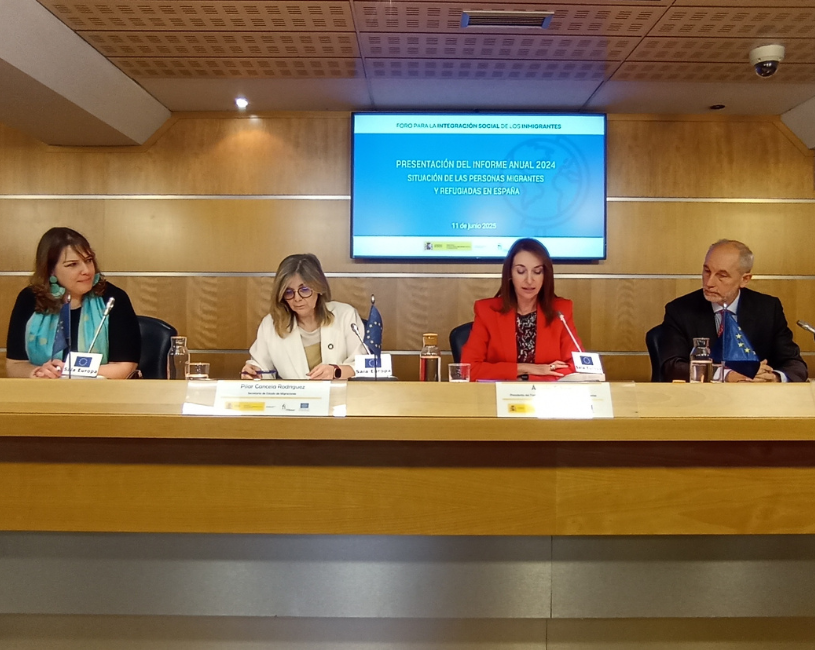
On June 11, the Headquarters of the European Commission Representation in Madrid hosted the presentation of the Annual Report 2024 of the Forum for the Social Integration of Immigrants (FISI), co-financed by the European Union through the Asylum, Migration and Integration Fund (FAMI). It is a key document for the diagnosis and proposal of policies around the situation of migrants and applicants or beneficiaries of international and temporary protection in Spain. The report was presented at an event that brought together government representatives, embassies, civil society and international agencies.
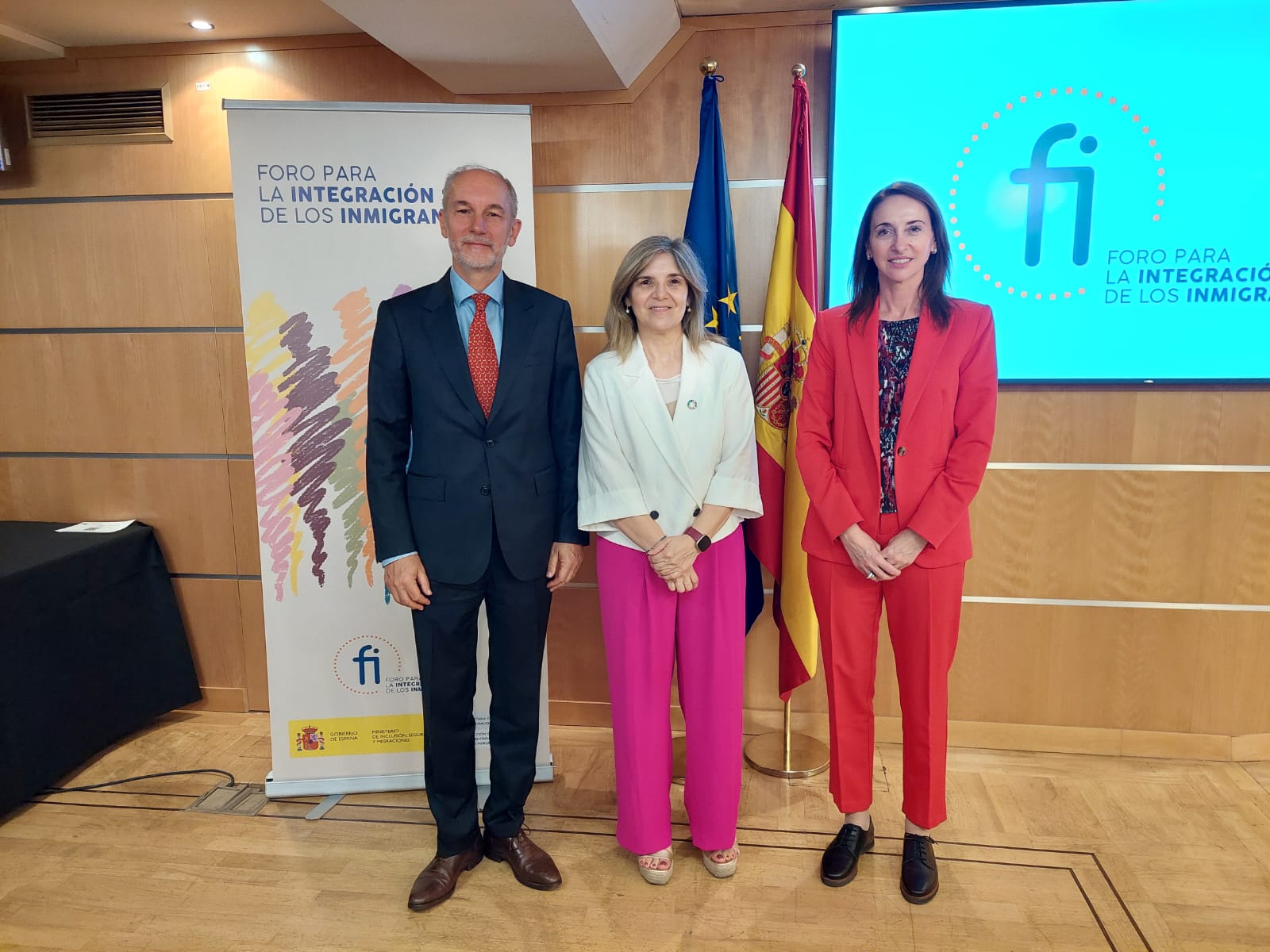
The institutional welcome was given by the Secretary of State for Migration, Pilar Cancela; the president of the Forum, Ángeles Solanes and the Attaché for Migration Affairs in the Representation of the European Commission in Spain, Étienne de Perier.
In her speech, the president of the Forum, Ángeles Solanes, stressed the role of FISI as a plural space for dialogue between civil society, migrant associations, trade union and business organizations and public administration. In addition, he highlighted the five keys of the 2024 Report: the urgency of prioritizing integration versus migratory control, legal barriers in international protection, the essential role of migrant associations in education, the coexistence of greater labor affiliation with high precariousness (especially in women), and the importance of strengthening integration and coexistence policies at both regional and local levels.
The representative of the European Commission in Spain, Etienne de Perier, placed special emphasis on ‘’the many challenges faced by migrants and refugees in their integration process, on the need for an active employment policy, on the importance of women’s integration into the labour market and on training programmes in key skills’’.
For her part, the Secretary of State for Migration, Pilar Cancela, stressed that ‘’concepts such as social status, integration, inclusion, social cohesion, are concepts that seem forgotten in the midst of so much noise, but they are what structures, what defines us and what places Spain in a certain position from the perspective of migration policy’’.
During the presentation of the report, the chairmen of the four committees of the Forum, through a series of questions, detailed the main findings of the report. Enrique Barbero, from the Legal and International Affairs Committee, highlighted the main developments in the new Aliens Regulation and the role of the new model of socio-educational roots in the integration of foreign workers. Ana María Corral, Chair of the Committee on Employment and Equal Opportunities, addressed the issue of the employment situation of women in 2024. Juan Antonio Segura, de la Comisión de Políticas de Integración, defendió el modelo de convivencia intercultural como alternativa efectiva para construir cohesión social. Finally, Ahmed Khalifa, from the Commission on Education and Social Awareness, assessed the role of migrant associations and intercultural mediation in schools and the remaining challenges in the field of school coexistence.
The event was closed by the Minister of Inclusion, Social Security and Migration, Elma Saiz Delgado, who reaffirmed that “the Forum offers us once again a rigorous, plural and committed analysis with migrants and refugees in the center and proposing concrete responses to guarantee them real access to rights. All this with the aim of strengthening social cohesion and improving our public policies’’.
Below you can download the Annual Report and its executive summary in English and Spanish.
Annual Report 2024 on the situation of migrants and refugees in Spain
Associated image gallery