
La ministra Elma Saiz y la vicepresidenta de Colombia Francia Márquez se reúnen en Bogotá para hablar sobre inclusión y políticas de igualdad
15/08/2024
Reunión bilateral
La ministra Elma Saiz y la vicepresidenta de Colombia Francia Márquez se reúnen en Bogotá para hablar sobre inclusión y políticas de igualdad
Topics:
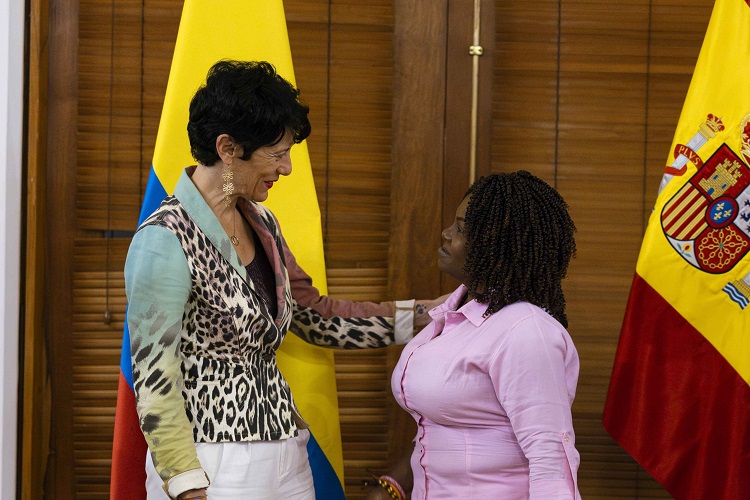
- Ambas representantes han centrado su reunión en el ámbito de las rentas mínimas como herramientas para combatir la vulnerabilidad, en las medidas para reducir la brecha de género y en las políticas migratorias.
- Saiz ha compartido con la vicepresidenta Márquez el Laboratorio de Política Social que permite la evaluación científica de las políticas ligadas al Ingreso Mínimo Vital y que es referente internacional.
- La ministra ha puesto en valor las medidas del Gobierno español para reducir la brecha de género y promover la corresponsabilidad entre los progenitores.
- En el ámbito de las políticas migratorias, Saiz ha presentado el proyecto de migración regular, WeCare, de movilidad laboral en el área de los cuidados.
- La ministra Saiz se reúne también este jueves con la ministra del Trabajo de Colombia, Gloria Inés Ramírez, para hablar de reformas estructurales del mercado laboral y las pensiones.
- Elma Saiz: “Es un gran honor reunirme con un referente como Francia Márquez, con quien he podido compartir el impulso de este Gobierno para que la igualdad real y efectiva sea un ámbito transversal, que implique tanto a las políticas laborales como la lucha contra la violencia de género o la atención a la doble vulnerabilidad de las mujeres migrantes. Estoy convencida de que este diálogo enriquecerá nuestros enfoques y promoverá una mayor colaboración entre nuestros países”.
Share on social networks:
La ministra de Inclusión, Seguridad Social y Migraciones de España, Elma Saiz, ha mantenido una reunión con la vicepresidenta y ministra de Igualdad y Equidad de Colombia, Francia Márquez, en un encuentro destinado a compartir experiencias y fortalecer la relación entre ambos países, especialmente, en materia de políticas sociales.
La reunión, celebrada este miércoles en Bogotá, ha permitido a la ministra Saiz compartir con la vicepresidenta colombiana la experiencia del Gobierno español en múltiples ámbitos, fundamentalmente: el diseño de una renta mínima como el Ingreso Mínimo Vital (IMV), las reformas emprendidas tanto en el ámbito laboral como de la Seguridad Social, las políticas para reducir la brecha de género y las de migraciones.
Por otra parte, ambas representantes gubernamentales han valorado la situación internacional y las repercusiones sobre sus respectivos países y han coincidido en la necesidad de políticas que den certidumbre a los ciudadanos. En España, ha explicado Saiz a su interlocutora, las reformas puestas en marcha por el Gobierno han permitido transformar el mercado laboral, que alcanza cifras récord de empleo estable y de calidad y que están contribuyendo a reforzar el sistema de pensiones.
Impacto de las rentas mínimas
Ambas representantes han abordado el modelo de rentas mínimas para la ciudadanía como herramienta eficaz para luchar contra la pobreza severa, así como las políticas asociadas que promueven la inclusión.
Elma Saiz ha compartido la apuesta del Gobierno por un modelo de evaluación científica de las políticas ligadas al Ingreso Mínimo Vital, que permite medir la eficacia de las medidas puestas en marcha y adaptarlas a las necesidades reales. El Laboratorio de Política Social (Policy Lab) es un referente internacional, avalado por la Unión Europea y por el que han mostrado interés países como Estados Unidos y organizaciones como el Banco Mundial.
La vicepresidenta Márquez, a su vez, ha explicado su modelo de Renta Ciudadana, un programa que, al igual que el IMV, busca proporcionar un ingreso básico a los ciudadanos.
Igualdad y corresponsabilidad
Por otro lado, la ministra Saiz y la vicepresidenta Márquez han coincidido en la necesidad de diseñar medidas para avanzar en la igualdad de género, así como en la corresponsabilidad entre hombres y mujeres en el cuidado de los hijos.
La vicepresidenta Márquez ha mostrado su interés por el complemento para reducir la brecha de género, una de las medidas que más impacto ha tenido en el camino a la igualdad, y que ya ha permitido reducir en cinco puntos la brecha de las pensiones y mejorar, así, la situación de vulnerabilidad de las mujeres pensionistas. Elma Saiz ha recordado, además, que España ha sido pionera en regular un permiso por nacimiento y cuidado de hijos idéntico para ambos progenitores, una medida que, por otra parte, favorece la empleabilidad de las mujeres, ya que supone un reparto más equitativo de las responsabilidades familiares.
Migración regular: Proyecto We Care
Este encuentro es el primero en la agenda que la ministra Saiz mantendrá durante los próximos días en Colombia, que se va a enfocar también en las políticas migratorias de ambos países. En los últimos 10 años, se ha multiplicado por cuatro el número de trabajadores procedentes del país andino, actualmente, cerca de 219.000.
La migración regular es una de las prioridades de España, por ello ha presentado una propuesta para la implementación del proyecto de migración laboral WeCare, enfocado en la movilidad laboral en el sector de cuidados, con Colombia como país socio preferente. Esta iniciativa busca abordar y resolver la escasez de mano de obra en ambos países a través de un modelo de asociación de competencias.
En su viaje, la ministra Saiz celebrará un encuentro con la colonia española -cerca de 51.547 españoles viven en Colombia, según los últimos datos del INE, mitad hombres y mitad mujeres-. También visitará la Oficina de Movilidad Segura y participará en el “Diálogo de mujeres lideresas de las diásporas en América Latina y el Caribe”, organizado en Cartagena de Indias por la Organización Internacional para las Migraciones (OIM), la Organización de los Estados Americanos (OEA), la Organización Internacional del Trabajo (OIT), entre otras instituciones.
"Es un verdadero honor poder reunirme con la vicepresidenta y ministra Francia Márquez. Esta reunión representa un paso importante en nuestro compromiso compartido hacia la inclusión y la equidad social. Estoy convencida de que este diálogo enriquecerá nuestros enfoques y promoverá una mayor colaboración entre nuestros países”, ha concluido Saiz.
La reunión entre ambas responsables marca un hito en la colaboración entre España y Colombia, que tendrá continuidad en el futuro para avanzar en las políticas públicas que garanticen la igualdad y una protección social integral, así como, la movilidad laboral regular entre ambos países.
Reunión con la ministra del Trabajo, Gloria Inés Ramírez
Por otra parte, este jueves está prevista una reunión con la ministra del Trabajo de Colombia, Gloria Inés Ramírez, con el fin de abordar temas de interés común en protección social y empleo. Durante el encuentro, las ministras profundizarán en las experiencias de ambos países en materia de políticas laborales y sociales.
Asimismo, explorarán nuevas iniciativas orientadas a fortalecer la protección social, reafirmando el compromiso de ambos gobiernos con reformas y medidas que favorezcan el bienestar social y el empleo digno.