
La ministra Elma Saiz inaugura el III Foro sobre los retos de la formalización laboral en Iberoamérica
03/04/2025
Viaje oficial a República Dominicana
La ministra Elma Saiz inaugura el III Foro sobre los retos de la formalización laboral en Iberoamérica
Topics:
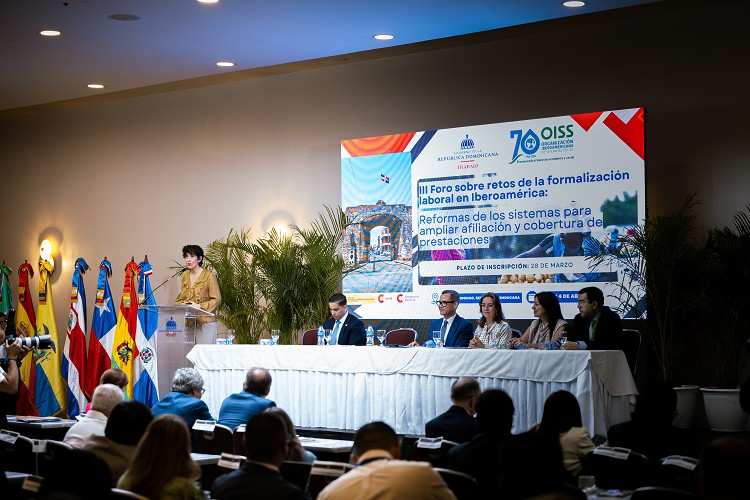
- En su intervención inaugural, la ministra ha puesto en valor la buena marcha del mercado de trabajo gracias a la reforma laboral, el aumento del 61% en siete años del Salario Mínimo Interprofesional (SMI), los incentivos a la contratación, entre otras medidas.
- La ministra ha puesto el foco en la informalidad laboral que protagonizan también las mujeres y los jóvenes. “Necesitamos alianzas sólidas entre gobiernos, empleadores, trabajadores y sociedad civil, para construir un entorno donde el trabajo como garantía de protección, derechos y la máxima cobertura posible frente a las contingencias sea una absoluta realidad”.
- En un panel posterior sobre experiencias exitosas con otros ministros Iberoamericanos, Saiz ha puesto en valor las nuevas medidas puestas en marcha por el Gobierno para compatibilizar trabajo y pensión o la implementación del nuevo sistema de cotización de los autónomos.
- “El Gobierno de España ha llevado a cabo muchas mejoras para ampliar derechos, reducir desigualdades y facilitar el acceso a la Seguridad Social, protegiendo mejor a trabajadores, autónomos, estudiantes y colectivos vulnerables”, ha subrayado.
Share on social networks:
La ministra de Inclusión, Seguridad Social y Migraciones, Elma Saiz, ha inaugurado este jueves en Santo Domingo (República Dominicana) el III Foro sobre Retos de la Formalización Laboral en Iberoamérica, un encuentro que reúne a representantes de distintos países de la región para abordar estrategias que impulsen el empleo formal y refuercen la protección social.
En su intervención, Saiz ha destacado las medidas implementadas por el Gobierno de España en los últimos años para mejorar la calidad del empleo y garantizar condiciones laborales dignas. Uno de los principales ejes de su discurso inaugural ha sido el refuerzo del Salario Mínimo Interprofesional (SMI), que ha aumentado un 61% en siete años, pasando de 735 euros en 2018 a 1.184 euros en la actualidad.
“Esta subida del salario mínimo ha sido una decisión de justicia social y un compromiso firme del Gobierno de España con los trabajadores y trabajadoras del país. En general, hemos llevado a cabo muchas mejoras para ampliar derechos, reducir desigualdades y facilitar el acceso a la Seguridad Social, protegiendo mejor a trabajadores, autónomos, estudiantes y colectivos vulnerables”, ha subrayado la ministra.
La ministra ha puesto el foco en la informalidad laboral que protagonizan también las mujeres y los jóvenes, que se ven relegados a trabajos “más precarios” e “intermitentes”. Para ello, ha instado a fortalecer la afiliación para garantizar el acceso a derechos fundamentales como la atención en salud, las pensiones o la protección frente a riesgos laborales, contribuyendo así al bienestar de los trabajadores y sus familias.
“Necesitamos alianzas sólidas entre gobiernos, empleadores, trabajadores y sociedad civil, para construir un entorno donde el trabajo como garantía de protección, derechos y la máxima cobertura posible frente a las contingencias sea una absoluta realidad”, ha afirmado la ministra.
Saiz también ha participado en el panel ‘Experiencias Exitosas de Países Iberoamericanos’, donde ha puesto en valor los avances logrados en el mercado laboral español gracias a la reforma laboral de 2022. Esta normativa, fruto del consenso con los agentes sociales, ha permitido alcanzar niveles históricos de estabilidad en el empleo.
“España ha pasado de ser un país con un mercado laboral marcado por la temporalidad a ser un referente en estabilidad. Hoy, la gran mayoría de los nuevos contratos que se firman son indefinidos. Esto significa que miles de trabajadores tienen hoy mayor seguridad y mejores perspectivas de futuro”, ha explicado.
Además, la titular de Inclusión ha destacado el impacto positivo del Ingreso Mínimo Vital (IMV), una política que ha supuesto un avance significativo en la lucha contra la pobreza y la exclusión social. “El IMV ha sido un escudo de protección para millones de personas. Se diseñó con un objetivo claro: garantizar que nadie quede atrás. Y lo hemos conseguido. Esta medida no solo ha reducido la pobreza, sino que también ha permitido que muchas familias encuentren nuevas oportunidades para salir adelante”.
Otro de los datos que la ministra ha puesto en valor es el récord histórico de afiliación a la Seguridad Social en España, que en marzo de 2025 ha alcanzado los 21,5 millones de afiliados y afiliadas. “Nunca antes en nuestra historia habíamos tenido tantas personas trabajando y cotizando a la Seguridad Social. Esto es un reflejo de la solidez de nuestra economía y del éxito de las políticas que estamos implementando”. También ha subrayado que este crecimiento de la afiliación es un indicador clave del buen estado del mercado laboral español y de la efectividad de las medidas adoptadas en los últimos años.
Durante su intervención en el foro, la ministra ha insistido en la importancia de seguir avanzando en la formalización del empleo y en la mejora de las condiciones laborales en todos los países iberoamericanos. “El empleo formal es sinónimo de derechos, estabilidad y progreso. Debemos seguir trabajando juntos para que cada vez más trabajadores tengan acceso a empleos de calidad, con protección social y con un salario digno”, ha concluido.