
La Mesa de Diálogo Social se reunirá el 14 de julio para negociar el nuevo esquema de cotización de autónomos
08/07/2025
Comisión de Trabajo, Economía Social, Inclusión, Seguridad Social y Migraciones
La Mesa de Diálogo Social se reunirá el 14 de julio para negociar el nuevo esquema de cotización de autónomos
Topics:
- La nueva fórmula, cuya negociación se inicia la próxima semana, se aplicará en los próximos tres años
- El secretario de Estado de la Seguridad Social y Pensiones ha anunciado en el Congreso esta convocatoria que analizará también el primer proceso de regularización de cuotas recién concluido
- En la mesa de Diálogo Social se determinará el calendario de aplicación de este sistema de cotización por ingresos reales en los próximos tres años con un nuevo despliegue de la escala de tramos de ingresos y bases de cotización
- Borja Suárez: “El objetivo es mantener un sistema justo, comprensible y previsible, en un marco de diálogo, transparencia y responsabilidad”
- Además, el secretario de Estado ha presentado los primeros resultados de la nueva regulación para compatibilizar voluntariamente trabajo y pensión que promueve la jubilación flexible. Medidas que ya han retrasado la edad de acceso en cerca de un año
Share on social networks:
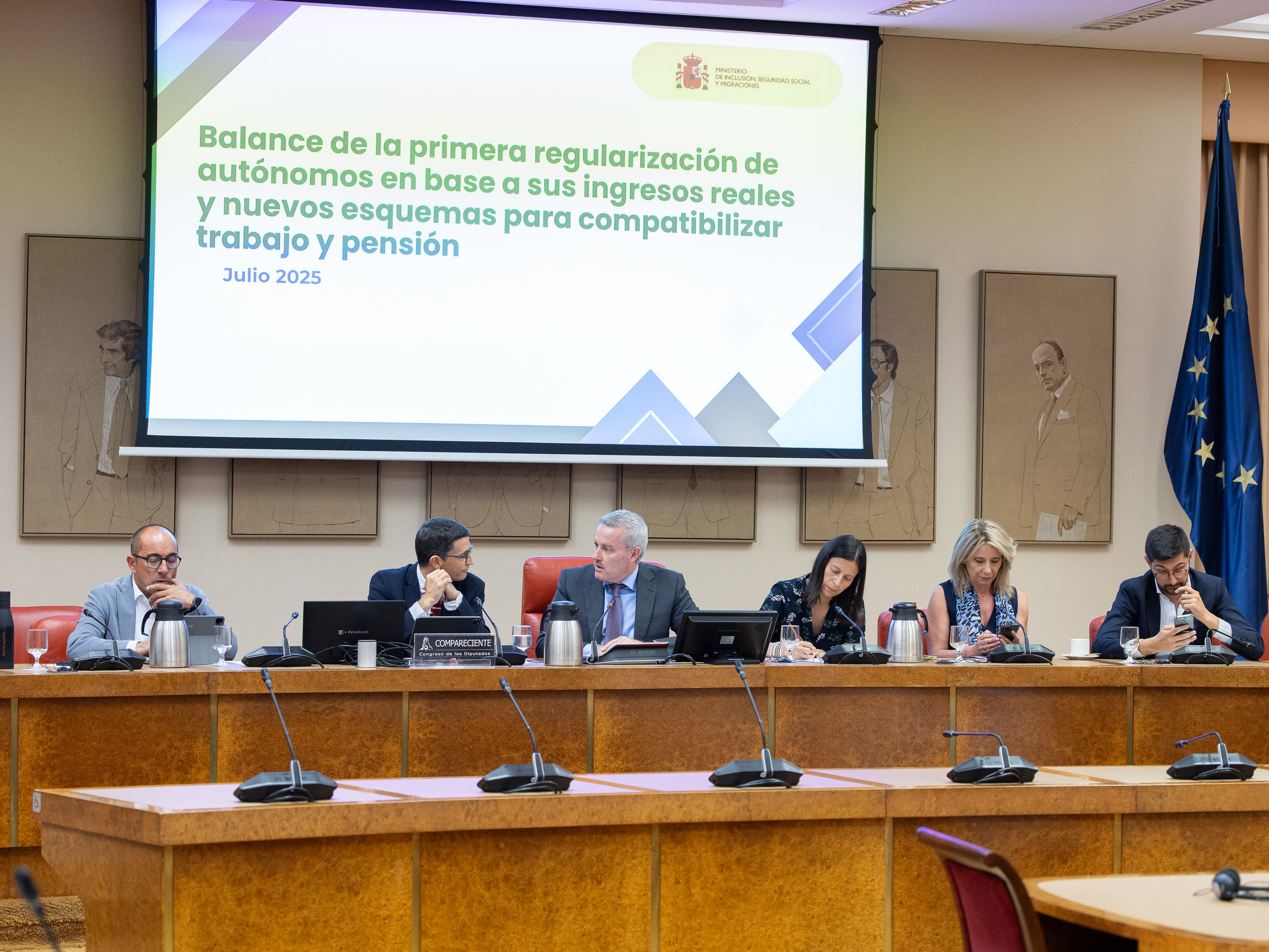
El secretario de Estado de la Seguridad Social y Pensiones, Borja Suárez, ha anunciado hoy en el Congreso de los Diputados que el próximo lunes, 14 de julio, se ha convocado la Mesa de Diálogo Social con organizaciones empresariales, sindicatos y asociaciones de trabajadores autónomos para iniciar la negociación del nuevo esquema de cotización de trabajadores autónomos para los próximos tres años.
El nuevo modelo de cotización por ingresos reales, recogido en el Real Decreto-ley 13/2022 y que entró en vigor en 2023, preveía una implantación gradual según la cual, cada tres años, en el seno del diálogo social, se debe determinar el calendario de aplicación de este sistema con un nuevo despliegue de la escala de tramos de ingresos y bases de cotización que, en esta ocasión, estarán vigentes entre 2026 y 2028.
Suárez, que ha comparecido en la Comisión de Trabajo, Economía Social, Inclusión, Seguridad Social y Migraciones, ha destacado que: “El objetivo es mantener un sistema justo, comprensible y previsible, en un marco de diálogo, transparencia y responsabilidad”.
“En 2025 concluirá el primero de estos periodos transitorios, al tiempo que hemos finalizado el primer proceso de regularización de las cuotas correspondientes al ejercicio 2023 derivado de este nuevo sistema. Podemos decir que su implementación está siendo un éxito, en un contexto donde los autónomos tienen un peso cada vez mayor en nuestro mercado laboral, nunca en la historia hemos tenido tantos autónomos de alta en nuestro país, más de 3,4 millones. Desde 2023, cuando entró en vigor este sistema, el RETA registra 114.000 afiliados más”, ha añadido.
Balance primer proceso de regularización
El secretario de Estado ha puesto en contexto esta reforma, que tiene su origen en las recomendaciones del Pacto de Toledo de 2020, y se integró en el Plan de Recuperación, Transformación y Resiliencia del Gobierno. En 2022, tras un amplio acuerdo en la Mesa del Diálogo Social —con participación de sindicatos, patronal y asociaciones representativas del colectivo UPTA, ATA y UATAE— se aprobó su implantación. El RDL fue aprobado en el Congreso con más del 75 % de los votos favorables.
“Esta reforma responde a los principios de justicia contributiva, equidad progresiva y sostenibilidad, y pone fin a un sistema que suponía pensiones para los autónomos muy inferiores a las de los trabajadores asalariados”, ha indicado Suárez, que ha aportado datos como que más del 80% de estos trabajadores cotizaban por la base mínima, con pensiones hasta un 37% inferiores a las de otros regímenes y que en un 36% de los casos necesitan de complementos a mínimos.
Suárez ha dado los detalles de este proceso de regularización que se inició en octubre de 2024, tras el cierre de la campaña del IRPF de 2023. Su gestión ha requerido una compleja coordinación técnica y administrativa, con más de 1.500 millones de actualizaciones de datos procedentes de la Agencia Tributaria, la Tesorería General de la Seguridad Social (TGSS), las mutuas, el SEPE y las haciendas forales. En total, se han revisado las cotizaciones de más de 3,7 millones de autónomos y se han emitido más de 4,2 millones de notificaciones.
Para más de dos millones de personas no ha sido necesario realizar ajustes: 1,3 millones cotizaron dentro del tramo correspondiente y otras 800.000 se encontraban en situaciones no regularizables, como tarifa plana, subsidios o pensiones. Cerca de 1,6 millones sí han estado sujetas a regularización. De ellas, unas 796.000 cotizaron por debajo de lo debido y han tenido que abonar diferencias. Más de 460.000 lo hicieron por encima y han recibido devolución. Además, 324.000 no presentaron declaración de rendimientos, por distintas causas. Por otro lado, ha habido más de 429.377 renuncias a la devolución de cuotas.
Compatibilidad trabajo-pensión
El secretario de Estado de la Seguridad Social y Pensiones ha presentado además los primeros resultados de la nueva regulación para compatibilizar trabajo y pensión, acordado con los agentes sociales y que entró en vigor en abril de este año.
Suárez ha resaltado que “el nuevo conjunto de medidas aprobado en el RDL 11/2024 busca complementar las medidas de la reforma de pensiones y responder a los cambios estructurales que se dan en nuestra sociedad, al tiempo que corregimos una anomalía de nuestro mercado de trabajo en el que pasamos de una situación laboral plena a la jubilación de forma abrupta, de un día para otro, por falta de opciones a la hora de alcanzar la edad de jubilación".
El secretario de Estado ha repasado las medidas adoptadas con anterioridad que están cosechando buenos resultados. Las jubilaciones demoradas, representan ya el 11,4% del total de las nuevas altas, frente al 4,8% que suponían en 2019. Este cambio refleja el impacto de los incentivos a la demora vigentes desde 2022 y la reconfiguración del marco de jubilación anticipada. Como resultado, la edad media de acceso a la jubilación se sitúa en 65,2 años, frente a los 64,4 años de 2019. Sólo en lo que va de año, el crecimiento interanual frente al acumulado en mayo de 24 nos muestra un crecimiento del 25,3% para las jubilaciones demoradas.
Borja Suárez ha repasado los objetivos de estas nuevas medidas que pasan por incrementar la flexibilidad en la combinación de trabajo y pensión, favorecer el acceso a la jubilación parcial y la activa, garantizar la posibilidad de una transición gradual del empleo hacia la jubilación, hacer que la jubilación demorada sea más atractiva y favorecer la extensión voluntaria de la vida laboral.
Para ello, las nuevas medidas pretenden garantizar un acceso justo a la jubilación parcial, mejorar los incentivos a la jubilación demorada y promover la jubilación activa.
En lo que se refiere a la jubilación activa, se elimina el requisito de tener una carrera de cotización completa, lo que facilita su acceso y tiene una especial incidencia desde la perspectiva de género.
En esta modalidad de jubilación, que permite compatibilizar durante un tiempo determinado la pensión y el trabajo una vez se accede a la situación de jubilación, se elimina el requisito de tener una carrera de cotización completa. Esto tiene una especial incidencia desde la perspectiva de género, al favorecer a colectivos con carreras de cotización más cortas e intermitentes, como históricamente ha ocurrido en el caso de las mujeres por el cuidado de hijos u otros familiares.
La jubilación activa hace posible que, cada año que se compatibilice trabajo y pensión, se incremente el porcentaje a aplicar en el percibo de la prestación, según una escala. Así, si la demora es de un año, el porcentaje correspondiente de la pensión será del 45%; si es de dos, 55%, si de 3, 65%, si de 4, 80% y, si la demora es de cinco o más años, podrá percibirse hasta el 100% de la prestación.
Además, cada 12 meses de actividad profesional ininterrumpida en esta jubilación activa, el porcentaje de la pensión se irá incrementando 5 puntos porcentuales, sin que, en ningún caso, se supere el 100% de la pensión.
Otra novedad importante es que este tipo de jubilación será compatible con los incentivos de demora, que hasta ahora no se percibían en esta modalidad.
La nueva regulación mejora también la jubilación demorada, al dar la posibilidad de recibir un incentivo adicional del 2% por cada seis meses de demora a partir del segundo año y no sólo por cada doce meses.
En lo que respecta a la jubilación parcial, la nueva regulación establece la ampliación de 2 a 3 los años de la posibilidad de anticipo de acceso a la edad de jubilación, eso sí, con adaptaciones en la reducción de la jornada. Además, se mejoran las condiciones del trabajador relevista, cuya contratación tendrá que ser indefinida y a tiempo completo.