
La cumbre de alto nivel de Ginebra destaca la política migratoria del Gobierno de España como ejemplo de gestión responsable y humana
26/11/2024
Consejo de la Organización Internacional para las Migraciones de la ONU
La cumbre de alto nivel de Ginebra destaca la política migratoria del Gobierno de España como ejemplo de gestión responsable y humana
Topics:
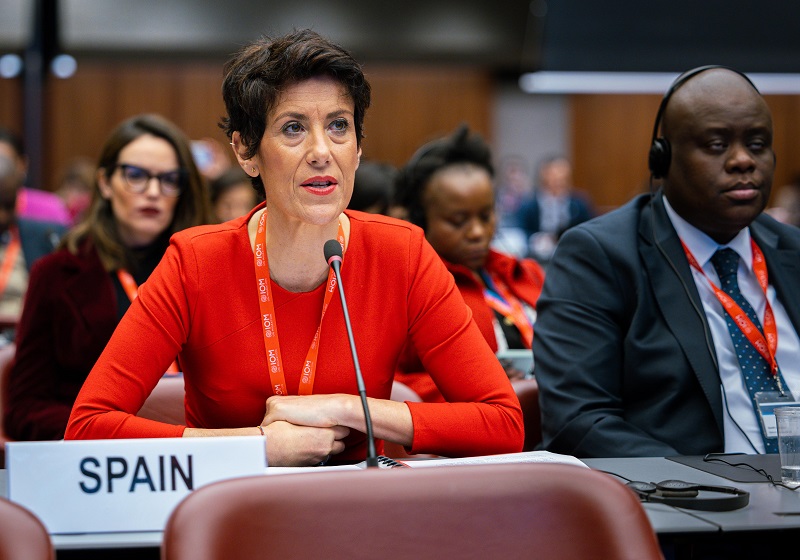
- Elma Saiz ha desarrollado la reciente aprobación del nuevo Reglamento de Extranjería, calificándolo como un hito que equilibra las demandas sociales y económicas del país, cumpliendo con los estándares europeos e internacionales y con el centro en los Derechos Humanos
- La directora general de la Organización Internacional para las Migraciones, Amy Pope, ha destacado a España como un ejemplo de gestión responsable y humana de las migraciones, apostando por las vías complementarias al reasentamiento y por la lucha contra las mafias
- Los acuerdos estratégicos de España con socios clave en África Occidental, América Latina y Marruecos, que promueven la incorporación de trabajadores migrantes a sectores específicos
- España está ultimando un Plan Nacional de Integración y Convivencia Intercultural para contribuir a la cohesión social y que contará con los recursos necesarios para fomentar la integración laboral, educativa y social de los extranjeros
Share on social networks:
La ministra de Inclusión, Seguridad Social y Migraciones, Elma Saiz, ha participado este martes en el Consejo de la Organización Internacional de las Migraciones, de la ONU, en Ginebra. Allí ha destacado la necesidad de fomentar vías de migración regular como respuesta a los desafíos globales, destacando que “una migración ordenada, regular y segura no solo beneficia a los migrantes, sino que también impulsa el desarrollo económico y social en las comunidades receptoras”.
El Consejo ha estado presidido por la directora general de la Organización Internacional para las Migraciones (OIM), quien ha destacado a España durante su intervención como un ejemplo de gestión responsable y humana de las migraciones, apostando por las vías complementarias al reasentamiento y por la lucha contra las mafias.
Durante su intervención en el segmento de Alto Nivel, Elma Saiz ha señalado como un hito fundamental la reciente aprobación del nuevo Reglamento de Extranjería, “Un nuevo marco normativo que representa un equilibrio entre las demandas sociales y económicas del país y las exigencias legales españolas, y estándares europeos e internacionales".
La ministra Saiz ha señalado que España comparte la visión de la OIM de que las vías migratorias legales no son únicamente un medio clave para prevenir la migración irregular sino también un instrumento para proteger los derechos de los migrantes y promover al desarrollo sostenible.
La migración como motor de desarrollo económico y social
La ministra subrayó que, para el Gobierno español, la migración es una oportunidad para aprovechar el talento y las capacidades de las personas migrantes, conectándolas con sectores que enfrentan déficit de mano de obra. En este sentido, mencionó que programas como la gestión colectiva de contratación en origen (GECCO) han demostrado ser herramientas eficaces para garantizar la movilidad laboral internacional, reforzar los vínculos bilaterales y fomentar el desarrollo sostenible en los países de origen.
En 2024, España ha consolidado acuerdos estratégicos con socios clave en África Occidental, América Latina y Marruecos, que prevén la llegada de trabajadores migrantes para sectores específicos. Estas iniciativas incluyen nuevos memorandos firmados con Gambia, Mauritania y Honduras, por los que llegarán a España 350 trabajadores, así como el fortalecimiento de la relación histórica con Marruecos, que aportará más de 4.000 trabajadores en la próxima campaña.
Innovación y cooperación internacional
Elma Saiz ha destacado los esfuerzos del Gobierno de España en el desarrollo de mecanismos innovadores que fomentan la movilidad laboral internacional y el desarrollo de competencias. Estos esfuerzos están alineados con iniciativas globales como las Oficinas de Movilidad Segura, el acuerdo trilateral con Estados Unidos, Canadá, ACNUR y la OIM, y la plataforma Job in Spain, diseñada para facilitar el acceso al mercado laboral español para refugiados y migrantes cualificados.
Asimismo, la ministra ha resaltado proyectos piloto desarrollados con países como Costa Rica y Marruecos, en el marco de las Alianzas Mundiales de Competencias del Banco Mundial y la Unión Europea.
Como complemento a las iniciativas y acuerdos desplegados, Saiz ha anunciado que el Gobierno de España está ultimando un Plan Nacional de Integración y Convivencia Intercultural. Este plan contará con recursos para fomentar la integración laboral, educativa y social de los extranjeros, contribuyendo a la cohesión social.
Una visión global y un llamamiento a la acción conjunta
La ministra ha puesto en valor el modelo español, alineado con los marcos internacionales, como el Pacto Mundial para la Migración Segura, Ordenada y Regular, y la Agenda 2030 para el Desarrollo Sostenible. Además, ha reafirmado el compromiso de España con la implementación del Pacto Europeo de Migración y Asilo.
Saiz concluyó haciendo un llamamiento a la acción conjunta: “Solo trabajando juntos podremos diseñar un sistema migratorio global que sea seguro, inclusivo y beneficioso para todos. Este llamamiento no puede ser solo un debate, sino un punto de inflexión”.
Finalmente, afirmó que España pone su experiencia al servicio de la cooperación internacional, comprometiéndose a liderar, junto con organismos internacionales, países socios y comunidades locales, el esfuerzo para hacer de la migración una herramienta de progreso económico y social, siempre garantizando el respeto a los derechos humanos.